
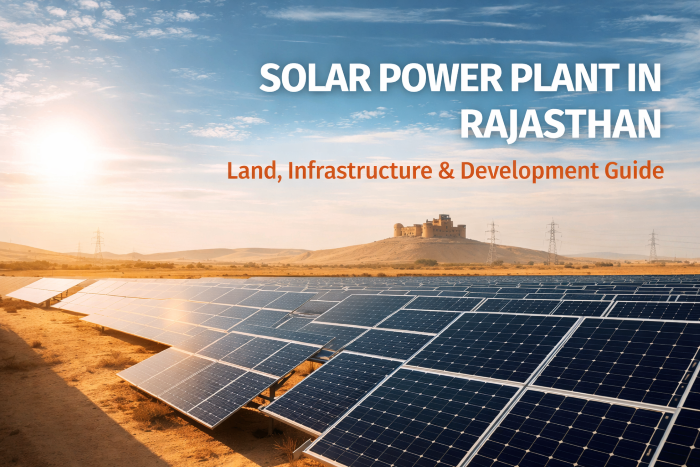
Solar Power Plant in Rajasthan: Complete Guide to Land, Infrastructure, and Project Development
Introduction: Why Rajasthan Is a Leading Destination for Solar Power Projects
Rajasthan has emerged as one of India’s most important regions for solar power plant development. With abundant sunlight, vast open land, and growing infrastructure, the state offers ideal conditions for utility-scale solar power plants, captive solar projects, and large renewable energy parks.
As India moves rapidly toward clean and sustainable energy, solar power projects in Rajasthan are playing a critical role in meeting future electricity demand. Today, many developers, EPC companies, and infrastructure contractors are actively involved in solar project development in Rajasthan, focusing not only on power generation but also on the supporting infrastructure that makes these projects reliable and long-lasting.
This comprehensive guide explains:
-
Why Rajasthan is ideal for solar power plants
-
How to select suitable land for a solar project
-
What infrastructure is required before installation
-
Key stages of solar project development
-
Common challenges and how to manage them
-
The importance of professional execution and quality construction
If you are planning a solar power plant in Rajasthan, this article will help you understand the full picture—from land selection to infrastructure development and long-term performance.
Rajasthan: A Natural Hub for Solar Energy
Rajasthan receives 300+ sunny days per year and has some of the highest solar irradiation levels in India. This natural advantage makes the state a top choice for large-scale solar power plants and renewable energy projects.
Key reasons why Rajasthan is preferred for solar projects:
-
High solar radiation and clear skies
-
Large availability of open and non-agricultural land
-
Suitable terrain for large solar parks
-
Expanding road and power transmission infrastructure
-
Strong ecosystem for renewable energy development
-
Long-term potential for grid-connected and captive solar plants
Because of these factors, Rajasthan continues to attract major investments and development activity in the solar power sector.
Understanding Land Requirements for a Solar Power Plant
Land is one of the most critical components of any solar power project. The size and quality of land directly affect project cost, layout efficiency, and long-term operations.
How Much Land Is Required?
As a general guideline:
-
1 MW solar power plant requires around 4 to 5 acres of land
-
10 MW solar plant may need 40 to 50 acres
-
50 MW solar plant may require 200 to 250 acres
-
100 MW solar plant may require 400 to 500 acres, depending on design and technology
The actual requirement depends on:
-
Type of solar modules
-
Mounting structure design
-
Spacing between rows
-
Terrain and layout efficiency
Key Factors to Check Before Finalizing Land in Rajasthan
Selecting the right land is not only about size and cost. Several technical and legal factors must be carefully evaluated:
1. Legal and Title Clearance
-
Clear ownership records
-
No disputes or litigation
-
Suitable land-use category for industrial or solar use
-
Proper approvals and permissions
2. Location and Accessibility
-
Good road connectivity for heavy vehicles
-
Easy access for construction equipment and materials
-
Reasonable distance from major highways or service roads
3. Grid Connectivity and Power Evacuation
-
Distance to nearest substation or transmission line
-
Feasibility of power evacuation infrastructure
-
Possibility of future capacity expansion
4. Topography and Soil Conditions
-
Flat or gently sloping land is preferred
-
Soil bearing capacity suitable for piling or foundations
-
Minimal rock or hard strata to reduce construction costs
5. Water Availability
Although solar plants do not consume water for power generation, water is required for:
-
Panel cleaning
-
Construction activities
-
Dust control and site maintenance
Proper planning of water tanks, pipelines, and storage systems is an important part of solar infrastructure development in Rajasthan.
Infrastructure Required Before Solar Panel Installation
A solar power plant is much more than just panels and inverters. Infrastructure development is a major part of the project and often determines the quality, safety, and long-term performance of the plant.
1. Land Development and Site Preparation
-
Clearing and grading of land
-
Leveling and compaction
-
Stormwater drainage and site drainage planning
-
Boundary demarcation and fencing
2. Foundations and Piling Works
-
Piling or RCC foundations for module mounting structures
-
Foundations for inverters, transformers, and control rooms
-
Structural stability works based on soil investigation reports
3. Internal Roads and Access Infrastructure
-
Roads for movement of heavy vehicles and cranes
-
Maintenance access roads inside the plant
-
Proper turning radius and load-bearing capacity
4. Water Infrastructure
-
Water tanks for panel cleaning
-
Pipeline networks inside the plant
-
Pumping systems and storage arrangements
5. Electrical and Utility Support Works
-
Transformer foundations and equipment platforms
-
Cable trenches and ducting
-
Control rooms and auxiliary buildings
-
Earthing systems and safety infrastructure
6. Security and Perimeter Infrastructure
-
Boundary walls or fencing
-
Security rooms and access control points
-
Lighting and basic surveillance provisions
All these components together form the backbone of a solar power plant. High-quality execution of these works ensures long-term reliability and lower maintenance costs.
Step-by-Step Process of Solar Power Plant Development
Step 1: Site Identification and Land Finalization
The first step is to identify a suitable site based on:
-
Solar potential
-
Land availability
-
Connectivity and grid access
-
Legal and environmental factors
Step 2: Surveys and Studies
-
Topographical survey
-
Soil investigation
-
Preliminary layout planning
-
Feasibility and evacuation studies
Step 3: Infrastructure Planning
-
Site development plan
-
Road and drainage layout
-
Foundation and structural design
-
Water and utility infrastructure planning
Step 4: Construction and Execution
-
Land development and leveling
-
Foundations and piling works
-
Road construction and drainage works
-
Utility and support infrastructure
-
Quality checks and safety inspections
Step 5: Solar Equipment Installation
-
Mounting structure installation
-
Module installation
-
Inverter and transformer installation
-
Cable laying and electrical connections
Step 6: Testing and Commissioning
-
Mechanical and electrical checks
-
Performance testing
-
Safety verification
-
Final commissioning and handover
Importance of Quality Construction in Solar Projects
A solar power plant is designed to operate for 25 years or more. Poor-quality civil or infrastructure work can lead to:
-
Structural failures
-
Uneven settlement of foundations
-
Waterlogging and drainage issues
-
Higher maintenance costs
-
Reduced plant performance and safety risks
That is why quality construction, proper materials, and professional execution are essential for long-term project success.
Common Challenges in Solar Projects and How to Manage Them
1. Land and Documentation Issues
Delays in land clearances and approvals can affect project timelines. Proper due diligence and planning help reduce these risks.
2. Soil and Terrain Challenges
Unexpected soil conditions can increase foundation costs. Detailed soil investigation and suitable foundation design are critical.
3. Infrastructure Delays
Delays in roads, foundations, or utility works can impact equipment installation schedules. Strong project management is required to keep timelines on track.
4. Quality and Safety Management
Large construction sites involve heavy machinery and multiple teams. Strict safety procedures and quality control systems are essential to avoid accidents and rework.
Role of a Professional Infrastructure Partner
An experienced infrastructure contractor plays a vital role in the success of a solar power plant project by handling:
-
Land development and site preparation
-
Civil and structural works
-
Foundations and piling
-
Internal roads and drainage
-
Water infrastructure for panel cleaning
-
Electrical and utility support works
-
Coordination and execution management
With the right partner, project developers can ensure better quality, faster execution, and lower long-term risks.
Long-Term Benefits of Solar Power Projects in Rajasthan
Solar energy is a long-term and sustainable investment. Key benefits include:
-
Clean and renewable power generation
-
Low operating and maintenance costs
-
Long project life and stable performance
-
Contribution to energy security and sustainability
-
Support for industrial and infrastructure growth
Rajasthan’s natural advantages make it one of the strongest regions in India for long-term solar power development.
Sustainability and Future Outlook
As India continues to expand its renewable energy capacity, Rajasthan will remain a key contributor to this growth. Future solar projects are expected to include:
-
Larger solar parks
-
Hybrid renewable projects
-
Improved storage and grid integration
-
More efficient technologies and layouts
This means that infrastructure quality and execution standards will become even more important in the coming years.
Conclusion: Building Reliable Solar Power Plants in Rajasthan
Developing a solar power plant in Rajasthan is a strategic and future-focused decision. The state offers strong solar resources, suitable land, and growing infrastructure support. However, the success of any solar project depends not only on panels and equipment, but also on strong infrastructure, quality construction, and professional execution.
From land selection and site development to foundations, roads, water systems, and utility works, every stage of infrastructure development plays a critical role in ensuring long-term performance, safety, and reliability.
With proper planning, experienced execution teams, and a focus on quality, solar power projects in Rajasthan can deliver clean energy, stable returns, and long-term value for decades to come.
There are many variations of passages of Lorem Ipsum available, but the majority have suffered alteration in a our some form, by injected humour, or randomised words which don't look even slightly believable. If you are going our as to use a passage of Lorem Ipsum, you need to be sure there isn't anything embarrassing hidden in the middle the of text. All the Lorem Ipsum generators on the Internet tend.