
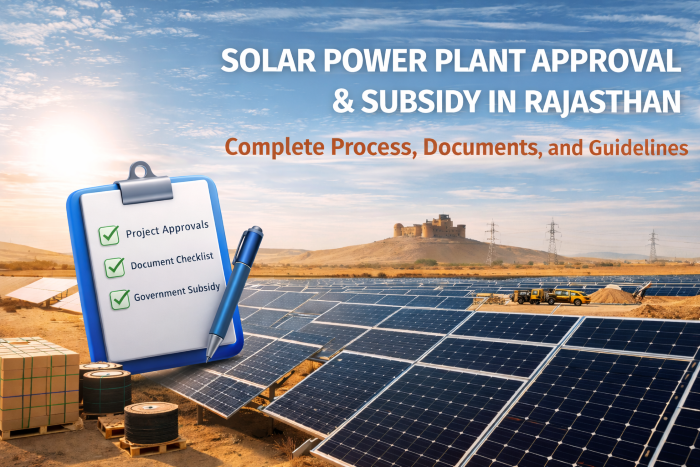
Solar Power Plant Installation in India
Solar Power Plant Installation in India: Complete Guide to Cost, Land, Process & ROI
Introduction
Solar energy is rapidly transforming the power sector in India. With rising electricity demand, increasing energy costs, and a strong focus on sustainability, solar power plant installation in India has become one of the most searched and discussed topics in the renewable energy industry.
Today, many industries, businesses, and project developers are exploring:
-
How to install a solar power plant in India
-
What is the cost of a solar power plant?
-
How much land is required?
-
What is the step-by-step process?
-
What is the return on investment (ROI)?
A solar power plant is not just about installing panels. It is a long-term infrastructure project that involves land development, civil and structural works, electrical systems, grid connectivity, and professional execution.
In this complete guide, we explain everything you need to know about solar power plant installation in India, from planning and cost to construction and long-term benefits.
What Is a Solar Power Plant?
A solar power plant is a system that converts sunlight into electricity using solar photovoltaic (PV) panels. The generated electricity is:
-
Used for captive consumption (factories, industries, campuses), or
-
Supplied to the power grid, depending on the project type
Solar power plants are generally categorized into:
-
Utility-scale solar power plants
-
Captive solar power plants
-
Group captive or third-party solar projects
Regardless of the category, the basic installation process and infrastructure requirements remain largely similar.
Why Install a Solar Power Plant in India?
India is one of the fastest-growing solar markets in the world. Key reasons include:
-
High solar potential across most regions
-
Increasing electricity demand
-
Rising cost of conventional power
-
Strong focus on clean and renewable energy
-
Long-term cost savings and stable power generation
-
Environmental benefits and reduced carbon footprint
A solar power plant is a 25+ year asset, making it a reliable long-term investment in clean energy.
How Much Land Is Required for a Solar Power Plant?
Land requirement depends on:
-
Plant capacity (MW size)
-
Panel technology and layout design
-
Terrain and site conditions
As a general guideline:
-
1 MW solar power plant requires about 4 to 5 acres of land
-
5 MW plant may require around 20 to 25 acres
-
10 MW plant may require around 40 to 50 acres
-
Larger projects scale accordingly
The land should preferably be:
-
Flat or gently sloping
-
Easily accessible
-
Close to grid connectivity
-
Free from legal or ownership issues
What Is the Cost of Solar Power Plant Installation in India?
The cost of a solar power plant depends on several factors, such as:
-
Project size
-
Land and site development requirements
-
Type and quality of equipment
-
Infrastructure and civil works
-
Grid connectivity and evacuation distance
-
Execution quality and project management
Indicative Cost Range
These are general industry ranges and can vary based on project specifications and site conditions.
-
1 MW solar power plant cost: ₹3.5 crore to ₹5 crore (approx)
-
5 MW solar power plant cost: ₹17 crore to ₹25 crore (approx)
-
10 MW solar power plant cost: ₹35 crore to ₹50 crore (approx)
The cost per MW usually reduces for larger projects due to economies of scale.
Major Cost Components of a Solar Power Plant
1. Land and Site Development
This includes:
-
Land purchase or lease
-
Clearing and leveling
-
Compaction and grading
-
Drainage and boundary demarcation
Good site development ensures long-term stability and smooth construction.
2. Civil and Infrastructure Works
This is a critical part of any solar project and includes:
-
Foundations and piling for structures
-
Inverter and transformer foundations
-
Internal roads and access paths
-
Drainage systems
-
Water tanks and pipeline network
-
Control rooms and support buildings
-
Cable trenches and utility infrastructure
Strong infrastructure reduces maintenance issues and increases plant life.
3. Solar Modules and Mounting Structures
This includes:
-
Solar panels (modules)
-
Mounting structures (fixed tilt or tracker systems)
This usually forms the largest portion of the total project cost.
4. Electrical Equipment
This includes:
-
Inverters
-
Transformers
-
Switchgear
-
Cables and connectors
-
Earthing and lightning protection systems
These components are essential for safe and efficient power generation and grid connection.
5. Installation and Project Execution
This covers:
-
Mechanical installation
-
Electrical installation
-
Testing and commissioning
-
Project management and supervision
-
Safety and quality control
Professional execution helps avoid delays, rework, and performance issues.
Step-by-Step Process of Solar Power Plant Installation in India
Step 1: Project Planning and Feasibility
-
Decide project size and purpose (captive or grid-connected)
-
Identify suitable land
-
Check basic feasibility (access, grid, terrain, water)
-
Prepare preliminary layout and cost estimate
Step 2: Surveys and Site Studies
-
Topographical survey
-
Soil investigation
-
Layout optimization
-
Infrastructure planning
These studies help in proper foundation design and site development planning.
Step 3: Land Development and Site Preparation
-
Clearing and grading
-
Leveling and compaction
-
Drainage and stormwater management
-
Boundary and access planning
This stage prepares the site for construction activities.
Step 4: Civil and Foundation Works
-
Piling or RCC foundations for structures
-
Foundations for inverters, transformers, and buildings
-
Cable trenches and utility bases
-
Quality checks and curing
This stage forms the structural backbone of the solar power plant.
Step 5: Installation of Structures and Equipment
-
Mounting structure installation
-
Solar panel installation
-
Inverter and transformer placement
-
Cable laying and connections
Step 6: Testing, Grid Connection, and Commissioning
-
Electrical and mechanical testing
-
Safety checks and inspections
-
Grid synchronization
-
Final commissioning and start of power generation
Importance of Infrastructure Quality in Solar Projects
A solar power plant operates for 25 years or more. Poor-quality infrastructure can lead to:
-
Foundation settlement
-
Waterlogging and drainage issues
-
Damage to internal roads
-
Higher maintenance costs
-
Safety and reliability problems
That is why investing in good civil and infrastructure works is essential for long-term performance and stable returns.
Return on Investment (ROI) of a Solar Power Plant
Solar power plants offer:
-
Low operating and maintenance costs
-
Stable and predictable energy generation
-
Long asset life
-
Protection against rising electricity prices
Key factors affecting ROI:
-
Plant capacity and performance
-
Quality of construction and equipment
-
Downtime and maintenance efficiency
-
Tariff or power usage value
With proper planning and execution, solar projects in India can deliver strong and reliable long-term returns.
Common Mistakes to Avoid
-
Underestimating land development and infrastructure cost
-
Choosing equipment or contractors only based on lowest price
-
Ignoring drainage and access planning
-
Poor quality control during construction
-
Not planning for long-term maintenance and reliability
Why Professional Execution Matters
A solar power plant is a long-term infrastructure asset. Professional execution ensures:
-
Better construction quality
-
On-time project completion
-
Higher plant performance
-
Lower maintenance and repair costs
-
Improved safety and reliability
Future of Solar Power in India
India’s solar sector will continue to grow with:
-
Larger utility-scale projects
-
More captive and group captive plants
-
Better technologies and higher efficiency panels
-
Stronger focus on quality infrastructure and execution
This makes solar power plant installation a future-proof investment in clean energy.
Conclusion
Installing a solar power plant in India is a strategic decision that offers long-term economic and environmental benefits. However, success depends not only on panels and equipment, but also on:
-
Proper planning
-
Strong infrastructure
-
Quality construction
-
Professional execution
From land selection and site development to foundations, roads, water systems, and electrical works, every step plays a critical role in ensuring reliable performance for decades.
With the right approach and experienced execution partners, solar power plants can become stable, high-performing, and sustainable energy assets for the future.
There are many variations of passages of Lorem Ipsum available, but the majority have suffered alteration in a our some form, by injected humour, or randomised words which don't look even slightly believable. If you are going our as to use a passage of Lorem Ipsum, you need to be sure there isn't anything embarrassing hidden in the middle the of text. All the Lorem Ipsum generators on the Internet tend.