
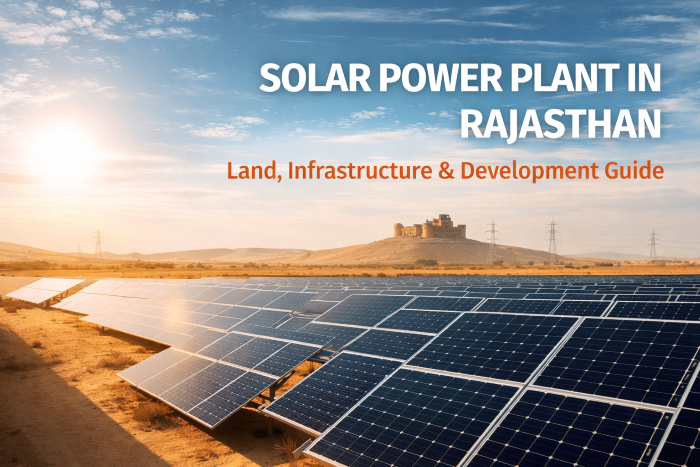
solar-project-infrastructure-rajasthan
Solar Project Infrastructure in Rajasthan: Complete Guide to Civil, Roads, Water & Foundations
Introduction
Solar energy is rapidly becoming one of the most important pillars of India’s power sector, and Rajasthan is at the center of this growth. With high solar radiation, large open land parcels, and expanding grid infrastructure, the state has become a preferred destination for utility-scale solar power plants and large renewable energy projects.
However, a successful solar project is not only about solar panels and inverters. The real backbone of any solar power plant is its infrastructure—including land development, civil and structural works, internal roads, foundations, water systems, and utility support infrastructure. Without strong and well-planned infrastructure, even the best solar equipment cannot deliver reliable performance over the long term.
This detailed guide explains everything you need to know about solar project infrastructure in Rajasthan, including:
-
Why infrastructure is critical for solar projects
-
Key components of solar plant infrastructure
-
Step-by-step development process
-
Common challenges and solutions
-
How quality infrastructure improves long-term performance
If you are planning a solar project in Rajasthan, this article will help you understand how to build a strong, durable, and future-ready solar power plant.
Why Infrastructure Matters in Solar Power Projects
A solar power plant is designed to operate for 25 years or more. During this long period, the plant is exposed to:
-
Extreme heat and sunlight
-
Wind and dust
-
Seasonal rains and temperature variations
-
Heavy maintenance vehicle movement
If the civil and infrastructure works are not executed properly, the project can face:
-
Foundation settlement and structural issues
-
Waterlogging and drainage problems
-
Damage to internal roads and access routes
-
Higher maintenance costs
-
Safety risks and operational disruptions
That is why infrastructure development is not just a supporting activity—it is a core part of solar project success.
Overview of Solar Project Infrastructure in Rajasthan
A typical solar power plant in Rajasthan requires the following major infrastructure components:
-
Land development and site preparation
-
Civil and structural works
-
Foundations and piling
-
Internal roads and drainage
-
Water infrastructure for panel cleaning
-
Electrical and utility support infrastructure
-
Security and perimeter infrastructure
Each of these components must be planned and executed with technical accuracy, quality materials, and proper supervision.
1. Land Development and Site Preparation
Clearing and Leveling
The first step in any solar project is preparing the land:
-
Removal of vegetation, stones, and obstacles
-
Cutting and filling to achieve required levels
-
Compaction of soil for stability
-
Marking of plant layout and boundaries
Proper leveling ensures:
-
Uniform structure installation
-
Better drainage
-
Easier construction and maintenance movement
Stormwater and Drainage Planning
Rajasthan experiences seasonal rainfall, and unmanaged water can cause:
-
Soil erosion
-
Waterlogging around foundations
-
Damage to internal roads
That is why stormwater drains, slope management, and water channels are essential parts of site development.
2. Civil and Structural Works
Civil works form the core physical structure of a solar power plant. These include:
-
Control room and auxiliary buildings
-
Equipment foundations and platforms
-
Cable trenches and ducts
-
Boundary walls and security structures
-
O&M buildings and storage areas
Structural design must consider:
-
Local soil conditions
-
Wind loads and environmental factors
-
Long-term durability and safety
High-quality civil construction ensures stable operations, safety of equipment, and long service life of the plant.
3. Foundations and Piling Works
Why Foundations Are Critical
Solar mounting structures, inverters, transformers, and control rooms all depend on strong foundations. Poor foundation work can lead to:
-
Tilting of structures
-
Cracks and settlement
-
Misalignment of panels
-
Safety hazards
Types of Foundations
Depending on soil conditions and design, foundations may include:
-
Pile foundations (driven or bored piles)
-
RCC pedestals
-
Precast foundation systems
-
Raft or spread footings for buildings and heavy equipment
A proper soil investigation is always required before finalizing the foundation design.
4. Internal Roads and Access Infrastructure
Importance of Internal Roads
Internal roads are needed for:
-
Transportation of modules and equipment during construction
-
Movement of cranes and heavy vehicles
-
Regular maintenance and cleaning operations
-
Emergency access
Key Features of Good Internal Roads
-
Proper width and turning radius
-
Adequate load-bearing capacity
-
Well-compacted sub-base and base layers
-
Surface suitable for long-term use
-
Proper drainage on both sides
Well-built roads reduce maintenance issues, dust generation, and operational delays.
5. Water Infrastructure for Panel Cleaning
Even though solar plants do not consume water for power generation, water is essential for panel cleaning to maintain efficiency, especially in dusty regions.
Typical Water Infrastructure Includes:
-
Water storage tanks (overhead or ground level)
-
Pumping systems
-
Internal pipeline network
-
Water points near solar arrays
Good water infrastructure helps:
-
Maintain high generation efficiency
-
Reduce manual effort and cleaning time
-
Ensure regular and systematic cleaning operations
6. Electrical and Utility Support Infrastructure
Solar projects require a strong network of electrical and utility infrastructure, such as:
-
Transformer foundations and platforms
-
Inverter rooms and equipment bases
-
Cable trenches and duct banks
-
Earthing and lightning protection systems
-
Internal power and control cable networks
These systems must be:
-
Technically sound
-
Safe and compliant with standards
-
Easy to maintain and expand
Poor-quality utility infrastructure can cause frequent faults, safety risks, and power losses.
7. Security and Perimeter Infrastructure
A solar plant is a valuable asset and requires proper protection. Security infrastructure typically includes:
-
Boundary walls or fencing
-
Entry and exit gates
-
Security rooms and guard posts
-
Lighting and basic surveillance systems
Good security planning helps prevent:
-
Unauthorized access
-
Theft and vandalism
-
Safety incidents
Step-by-Step Process of Solar Infrastructure Development
Step 1: Site Survey and Planning
-
Topographical survey
-
Soil investigation
-
Layout planning
-
Infrastructure design and phasing
Step 2: Land Development
-
Clearing and grading
-
Leveling and compaction
-
Drainage and stormwater works
Step 3: Foundation and Structural Works
-
Piling or RCC foundations
-
Equipment bases and building structures
-
Quality checks and curing
Step 4: Roads and Utility Infrastructure
-
Internal road construction
-
Cable trenches and ducts
-
Water pipeline and storage systems
Step 5: Final Preparation for Equipment Installation
-
Final leveling and cleaning
-
Alignment checks
-
Handover for mechanical and electrical installation
Common Challenges in Solar Infrastructure Projects
1. Soil and Ground Conditions
Unexpected soil conditions can increase foundation costs and timelines. Detailed investigation and flexible design help manage this risk.
2. Water and Drainage Issues
Poor drainage planning can lead to long-term maintenance problems. Proper slope and channel design are essential.
3. Quality Control
Large project sites involve multiple teams and activities. Without strict quality control, defects and rework can increase costs and delays.
4. Safety Management
Heavy machinery, piling rigs, and construction vehicles require strong safety systems to prevent accidents and disruptions.
How Quality Infrastructure Improves Long-Term Performance
Good infrastructure:
-
Protects equipment and structures
-
Reduces maintenance and repair costs
-
Improves plant availability and reliability
-
Enhances safety for workers and operators
-
Extends the overall life of the project
In simple terms, strong infrastructure directly increases the return and reliability of a solar power plant.
Long-Term Outlook for Solar Infrastructure in Rajasthan
As solar projects continue to grow in size and complexity, infrastructure standards will also evolve. Future projects will focus more on:
-
Faster construction methods
-
More durable materials
-
Better drainage and water management systems
-
Improved safety and access planning
-
Integration with storage and hybrid systems
This makes professional planning and execution even more important for upcoming solar developments.
Conclusion
A solar power plant is a long-term asset, and its success depends heavily on the quality of infrastructure development. From land preparation and foundations to roads, water systems, and utility support, every element plays a vital role in ensuring stable performance, safety, and durability.
Rajasthan, with its strong solar potential and growing renewable energy ecosystem, will continue to be a major center for solar projects. However, to fully realize this potential, developers must focus not only on technology but also on strong, well-executed infrastructure.
With proper planning, experienced execution teams, and a commitment to quality, solar projects in Rajasthan can deliver clean energy, long service life, and dependable performance for decades to come.
There are many variations of passages of Lorem Ipsum available, but the majority have suffered alteration in a our some form, by injected humour, or randomised words which don't look even slightly believable. If you are going our as to use a passage of Lorem Ipsum, you need to be sure there isn't anything embarrassing hidden in the middle the of text. All the Lorem Ipsum generators on the Internet tend.